By Aps Tree Removal · · Updated
Api Mariner, Qualified Arborist · 21 min read

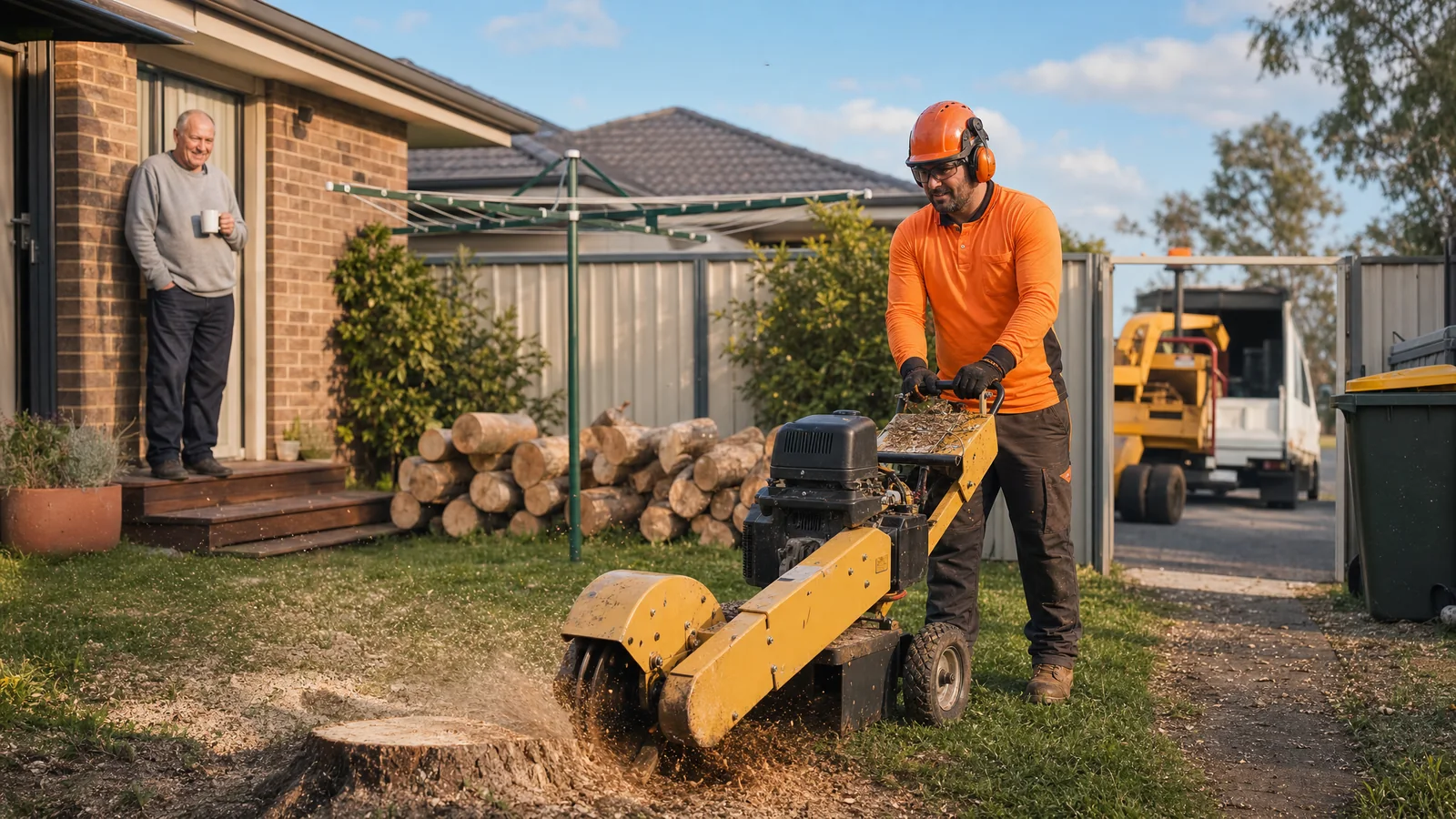
The tree comes down, the branches go through the chipper, the lawn is raked, and there in the middle of it all is a stump the size of a coffee table. What happens next is the part of a tree removal that people forget to plan for. Across the industry the stump is not usually part of the removal price, and plenty of homeowners find that out on the day [1]. This guide covers why a stump left behind turns into a bigger job later, how stump grinding actually works, what the public figures say it costs, what moves the price on a Melbourne block, and why the cheapest way to deal with it is to have it ground on the same visit as the tree.
Api Mariner is a qualified arborist who has been removing trees and grinding stumps across Melbourne's west, the inner suburbs and Geelong for more than 16 years. He grinds every stump 300 to 400 mm below ground, deep enough that the lawn, the paving or a new garden bed goes straight back over the top. What follows is how he thinks about the stump, written down.
Why leaving a stump behind is a false saving
The argument for leaving a stump is always the same: it saves a line on the quote, and it will rot away on its own. Neither half holds up. A stump the size of a dinner plate takes years to break down, and while it does, four things happen.
It reshoots
Plenty of the trees Api removes in the west push new shoots straight from the cut stump, and some throw suckers from the roots as well. Cutting the shoots off keeps them coming, because the root system under the stump is still alive and still holding energy. Grinding well below ground takes out the crown of the stump where those shoots start, which is why we describe the result as no regrowth, and why a stump that was cut flush or painted with poison so often turns into a thicket of sprouts within a season or two.
It draws pests
A decaying stump is a magnet for pests such as ants, cockroaches and termites [2]. Melbourne's west is full of brick veneer homes with timber frames and timber fences, and a rotting stump a few metres from the house is exactly the kind of harbour nobody wants nearby. Grinding removes the food source, and the grindings dry out fast once they are spread.
It is a trip hazard and a mowing nuisance
A stump at lawn level is the thing the mower hits, the thing a child runs into, and the thing the sprinkler line gets routed around for the next decade. Cut flush with the ground it is worse, because it disappears under the grass and catches a foot or a mower blade without warning. Ground 300 to 400 mm down, there is nothing to trip on and nothing to mow around.
It blocks whatever you wanted the space for
People remove trees to get their backyard back: a bigger lawn, a shed slab, a pool, a vegie bed, a driveway extension. A stump in the middle of that plan stalls it. Paving cannot go over it, turf will not knit across it, and a fence post cannot go through it. Getting the stump out on the same day the tree comes down means the space is usable the same week, not after a second booking.
Leave it or grind it
Ground out on the day
- No reshooting from the crown or the roots
- Nothing for ants, cockroaches or termites to move into
- Lawn, paving or a garden bed straight back over the top
- One travel charge, one set-up, one clean-up
- Free mulch from the grindings if you want it
Left behind
- Shoots and suckers that keep coming back
- A rotting harbour a few metres from the house
- A trip hazard hidden in the grass
- A second call-out with the grinder later
- Years of mowing around a lump in the lawn
How stump grinding works and how deep Api goes
A stump grinder is a machine with a toothed cutting wheel that chews the stump into chips a few centimetres at a time, sweeping from side to side and stepping down with each pass. Api's machine goes through gates and along side paths, which matters more in the western suburbs than people expect, because most of the stumps he grinds sit in backyards behind a single side gate. Here is what a grind looks like from arrival to clean-up.
How Api grinds a stump
- 1Walk the siteApi checks where the water, gas, irrigation and any cables run, looks for sleepers, edging, rubble and rocks around the stump, and clears a zone for the machine.
- 2Cut the stump lowIf the tree has just been felled, the trunk is cut as close to the ground as the saw allows, so the grinder starts on a low, flat face rather than a tall butt.
- 3Grind in passesThe wheel sweeps across the stump and steps down with each pass, chasing the surface roots outward, until the hole is 300 to 400 mm below ground.
- 4Sort the grindingsThe chips are raked back into the hole, spread on the beds as mulch, or loaded and taken away, whichever you have asked for.
- 5Clean upPaving, decking and lawn around the hole are blown and raked clean, and the site is left ready to turf, pave or plant.
Two details on depth. 300 to 400 mm is the standard because it removes the part of the stump that would reshoot and leaves enough soil depth to relay turf or lay a paving base over the spot. Where you are planning a fence post, a planting hole for a replacement tree or a slab, tell Api, because the grind can go deeper or wider at that point.
Surface roots are the other question. The grinder takes out the buttress roots that flare from the stump, but it does not chase every root across the lawn, and it does not need to: without a crown to feed, the roots left in the ground die off and break down. Roots running under paving, under a fence or on a neighbour's side of the boundary stay where they are.
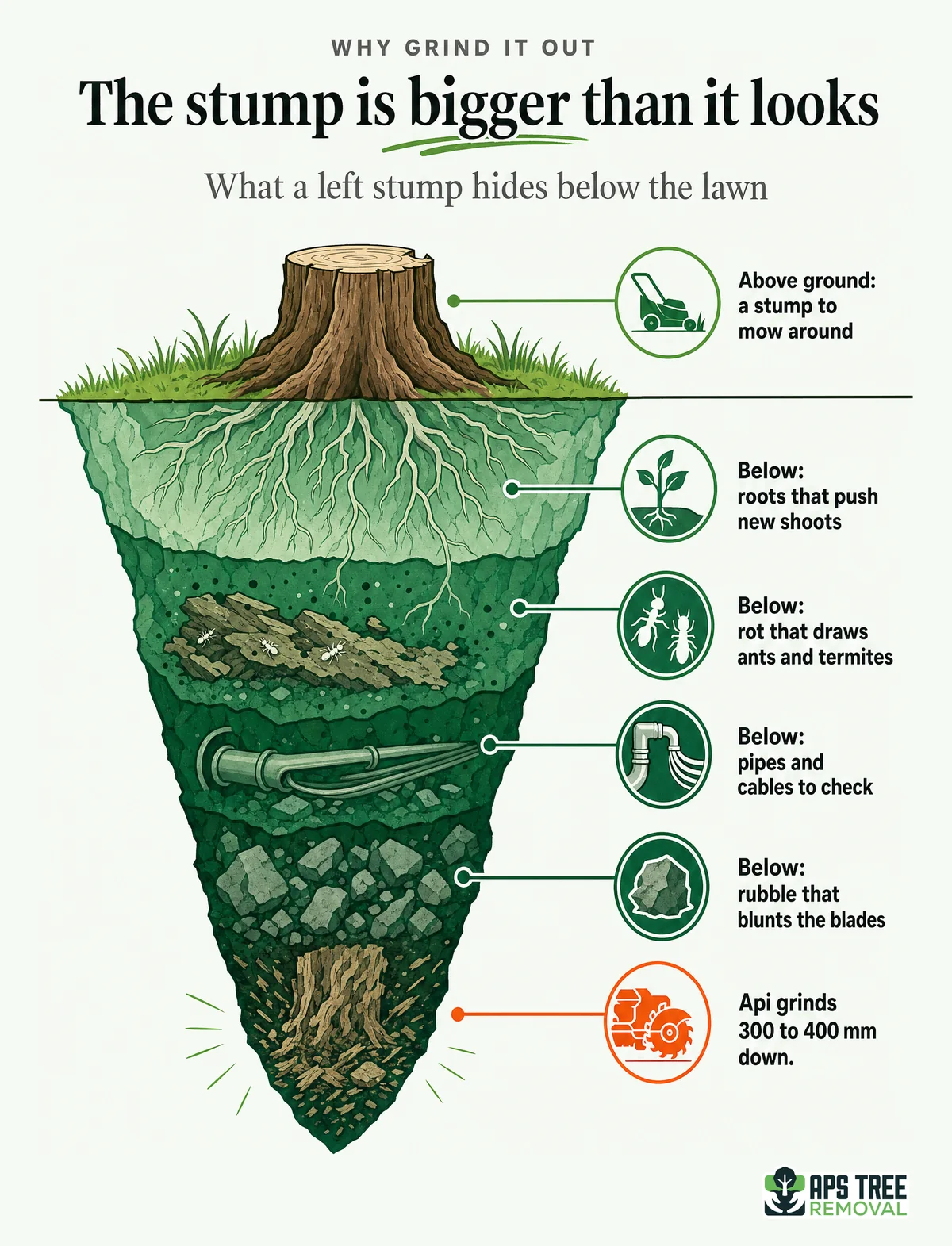
Stump grinding is dig-free, but it is not blind. Safe Work Australia's guide to tree work covers stump grinding alongside felling and chipping, and lists contact with underground services among the common hazards of the trade, with crush, entanglement and cut injuries from grinders and chippers alongside it [3]. That is the reason for the first step above, and it is not a formality.
What is under the lawn decides the method
Api asks about every pipe, sprinkler line and cable near the stump before the wheel touches the ground, and keeps everyone well clear of the machine while it runs, because a grinder throws chips and stones a surprising distance. A sprinkler line you forgot to mention is the most common surprise, and the cheapest to avoid: walk him past the taps and the controller before he starts.
What stump grinding costs and what moves the price
The public figures are indicative national ones, but they are a useful starting point. hipages puts a small stump of about 10 cm across at $100 to $150, and says most stump jobs take between 30 minutes and two hours, with the size of the stump the biggest single factor [2]. Its arborist guide notes that stump removal is not usually in a tree removal price and can run to $800 or more on a big or awkward one [1].
Indicative stump grinding figures (Australia, January 2026)
The shape of the curve is the useful part. hipages points out that a one-metre-wide stump does not cost twice what a half-metre stump does, because travel and set-up are built into every job, while a two-metre stump costs almost twice a one-metre one, because at that size the grinding time is the job [2]. Two things follow. Small stumps are mostly set-up, which is why they are cheap on the day the crew is already there and dear as a stand-alone visit. And a very large stump is priced on hours, so the more you can do to make those hours easy, the better the price.
Access, pipes, cables and rubble
For a stump on a Melbourne block, though, the width is rarely what decides the price. It is the site. hipages lists the things that make a stump job more expensive: narrow access, nearby gas or water pipes, underground cables, steps, sloping ground, a garden bed hard up against the stump, and builder's rubble, stones, iron or concrete in the ground, which can dull a machine's blades [2]. Every one of those is common in the west, and the last one is the sleeper.
| What is on site | Why it changes the price | What you can do |
|---|---|---|
| A narrow side gate or path | More time getting the machine in, out and set up, and more passes on a tight face | Measure the gate and mention it on the phone |
| Water, gas or irrigation lines | The grind has to stop short of them or work around them by hand | Tell Api where the sprinkler lines and tap lines run |
| Underground cables | Same again, with a live hazard on top | Point out where the shed or the pool pump is fed from |
| Steps or a slope | The machine has to be walked in and braced, which is slower | Clear the route and move loose pots |
| A garden bed against the stump | Plants and edging have to be protected or lifted first | Lift anything you want to keep before the day |
| Rubble, concrete, iron or stones | Blunts the teeth and can stop the job for a re-tooth | Warn Api if the block was filled or the tree sits over an old slab |
The rubble point deserves a paragraph of its own. Older blocks in the west often have the remains of a previous path or a demolished shed under the lawn, and newer ones can carry builder's fill. A grinder wheel that hits concrete or an old star picket stops the job while the teeth are checked, and in the worst case needs a new set. If you know the tree was planted over an old slab, or the block was filled when the house went in, say so at the quote and Api prices it in rather than discovering it at the bottom of the hole.
Api did a great job removing and stump grinding big yuccas on the narrow side of my house. Turned up to quote and did the job by himself. Reasonable price and he is very easy to talk to, hard working and reliable man. Appreciated!
That review is the tight-access case in one paragraph: big yuccas on the narrow side of a house, removed and ground on the same visit, quoted and done by Api himself. Yucca is a good example of why the grind matters, because a yucca cut at ground level readily resprouts from the base, and the only way to be rid of it is to take the crown out below ground.
How this sits inside the tree removal price
If you are pricing the whole job, the stump is one line of several, and it is worth understanding how tree removal is priced before you compare quotes, because the removal figures dwarf the grinding ones. hipages puts typical tree removal in Australia between $360 and $3,000, notes that those prices usually include a basic clean-up but not the stump, and gives Melbourne an average of about $2,350 a job [4]. On that scale the stump is a small add-on when it rides on the removal, and a disproportionately dear one as a separate booking.
Why removal and grinding belong on the same visit
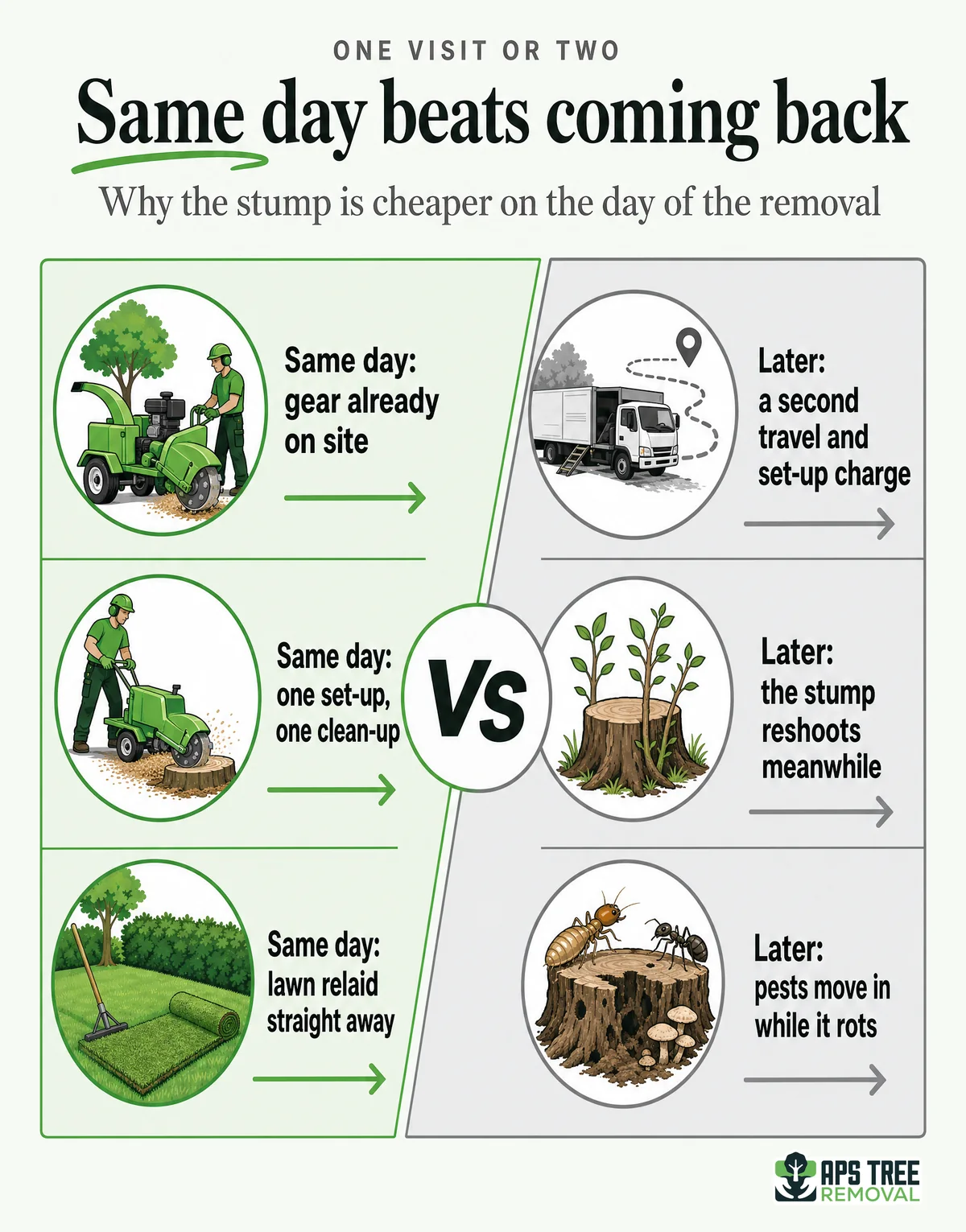
This is the part of the guide Api would put in capitals if he could. The stump is cheapest on the day the tree comes down, and the reason is plain arithmetic. hipages' arborist guide says the same thing: stump removal is not usually included in the cost of tree removal, but getting both quoted together can save money because the arborist arrives with the equipment for both jobs [1].
Think about what a second visit actually costs. The truck drives out again. The grinder is loaded, unloaded, walked through the gate and set up again. The site is protected again and cleaned again. All of that is set-up, and set-up is most of the price of a small stump. On the day of the removal every one of those steps has already been paid for by the tree, so the stump is priced on the grinding minutes alone. That is why having the stump ground out at the same time as the removal is the single easiest saving on the whole job.
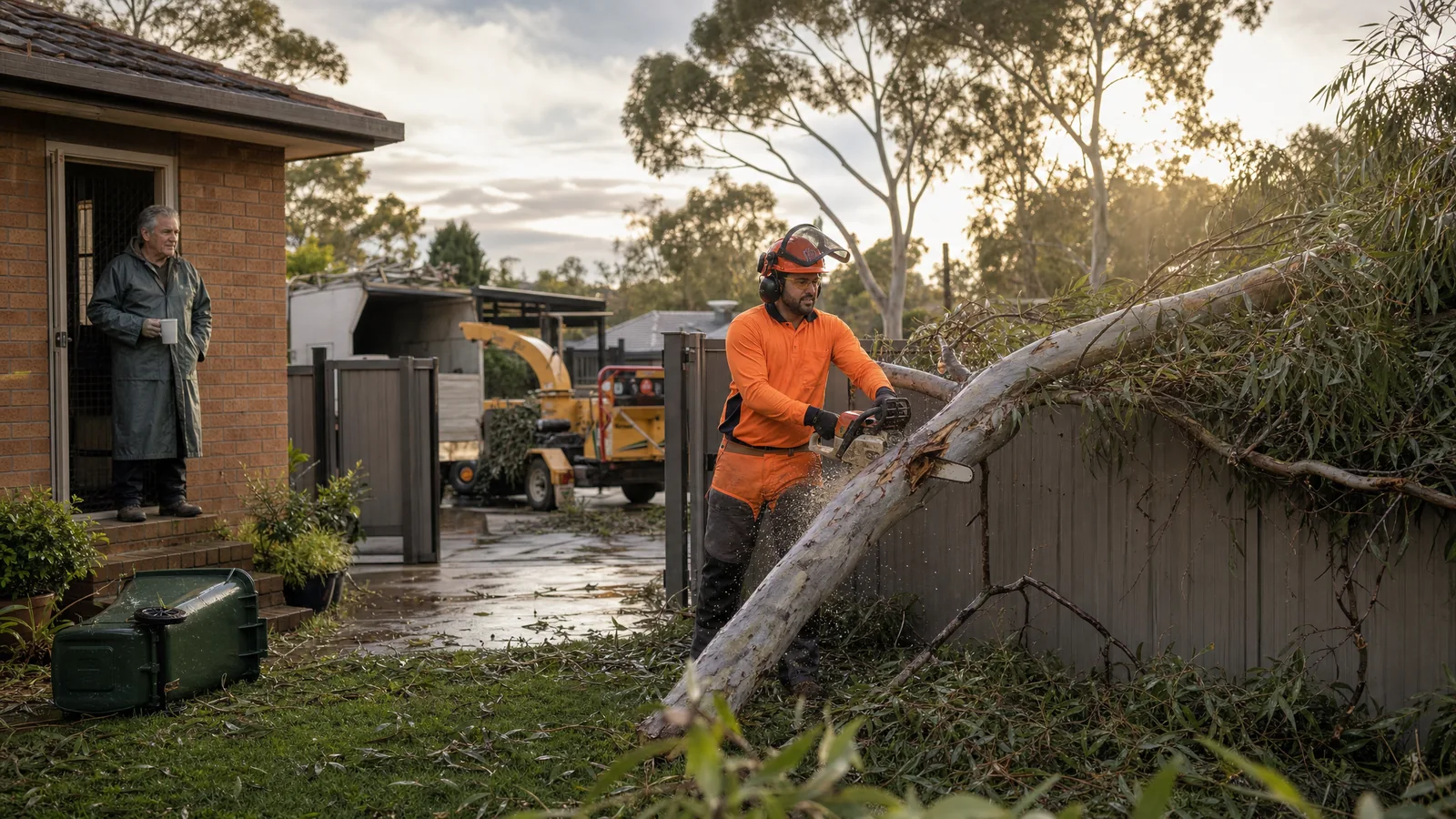
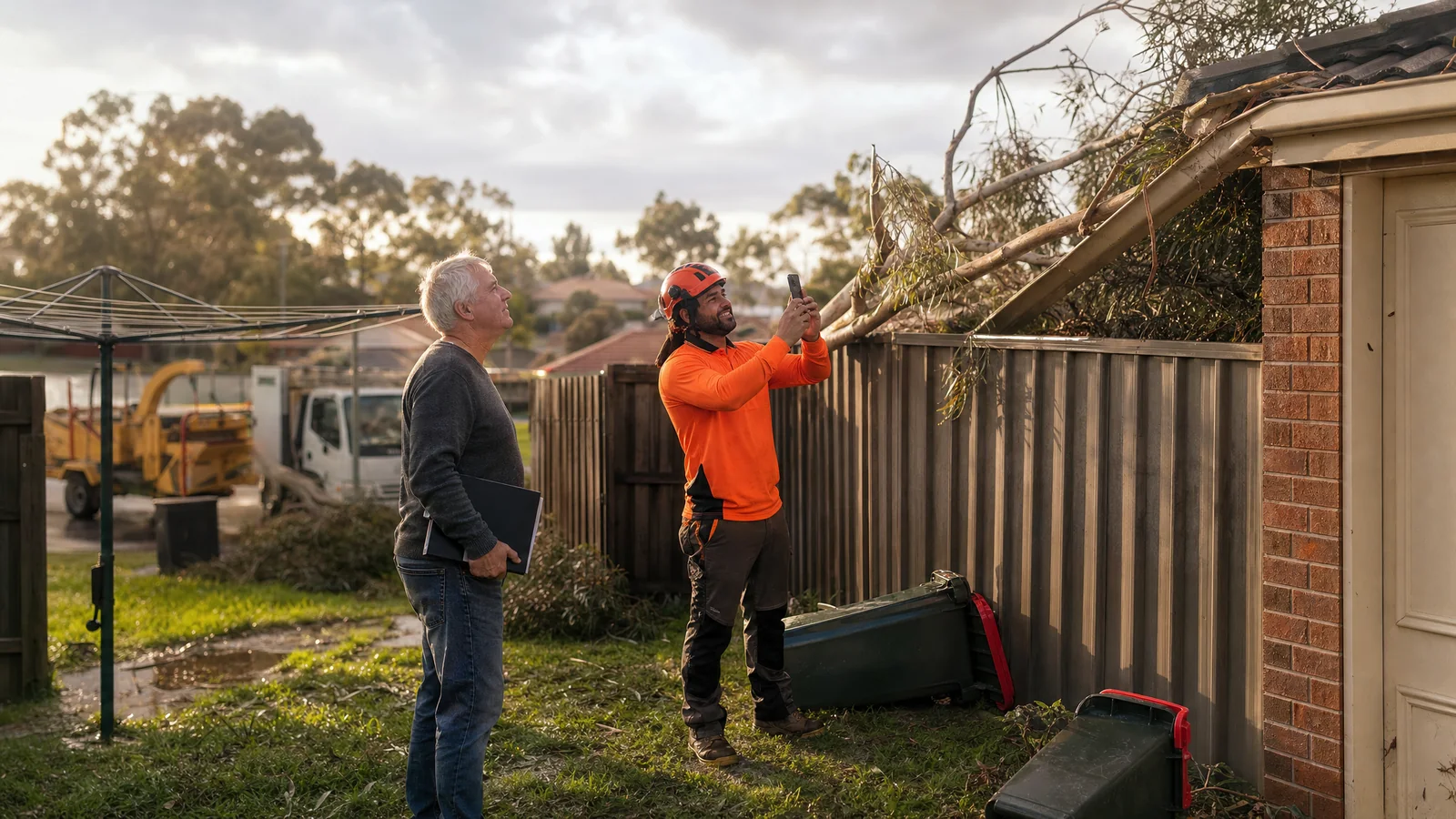
The same logic applies when a tree comes down in a storm. Once the make-safe is done and the trunk is off the fence, the stump is the tail end of the same job, and it is cheapest to grind while the crew and the machine are already standing next to it.
There is a practical reason as well as a financial one. A freshly cut stump is green, soft and easy to grind. Leave it a year or two and it either dries into something much harder or starts to rot on the outside while staying solid in the middle, and both take longer under the wheel. The lawn also recovers faster when the hole is filled and topped on the same day the tree came out, instead of being a bare patch around a stump for a season and then a hole.
A tree removal and stump grind on one visit
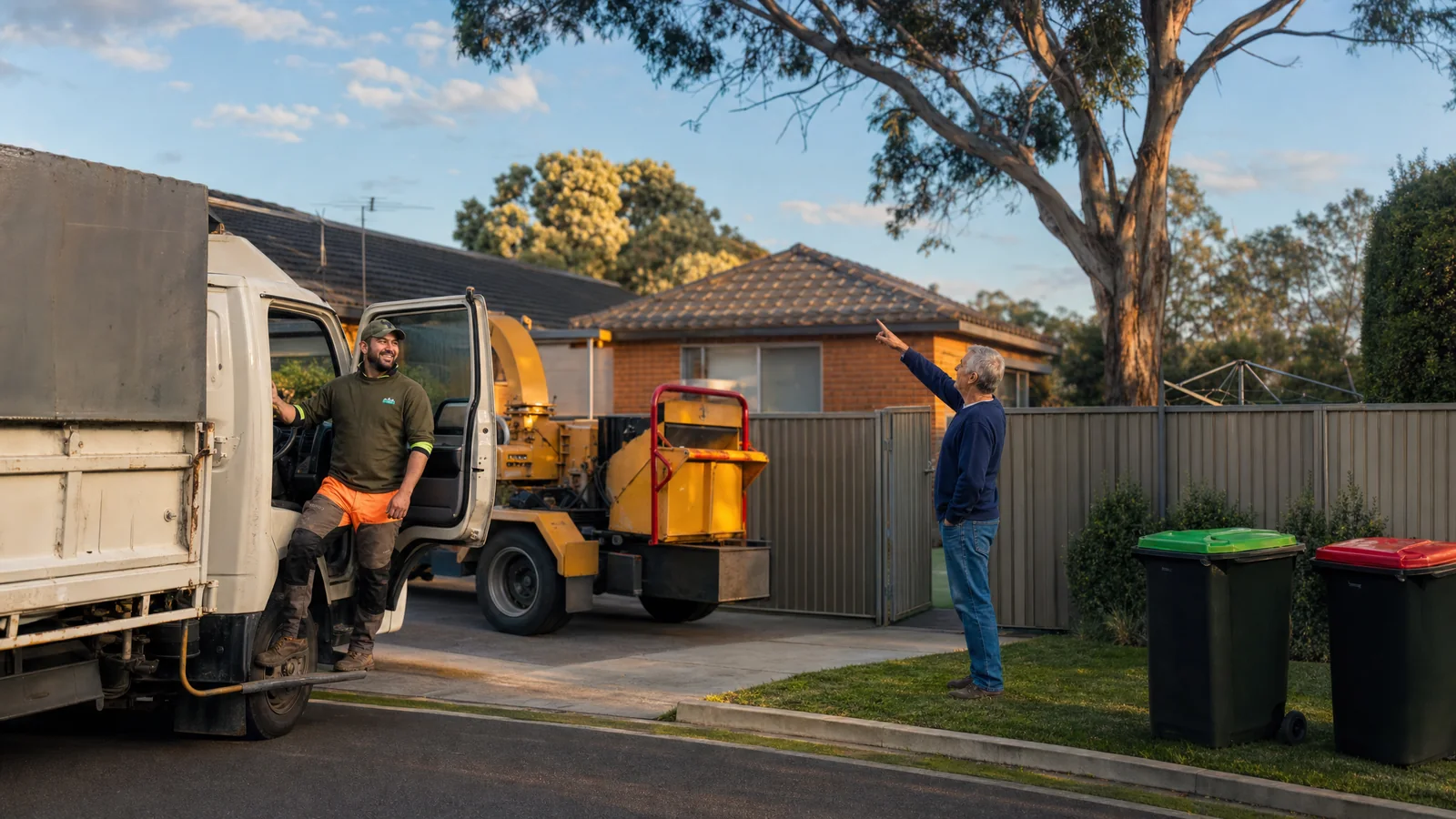
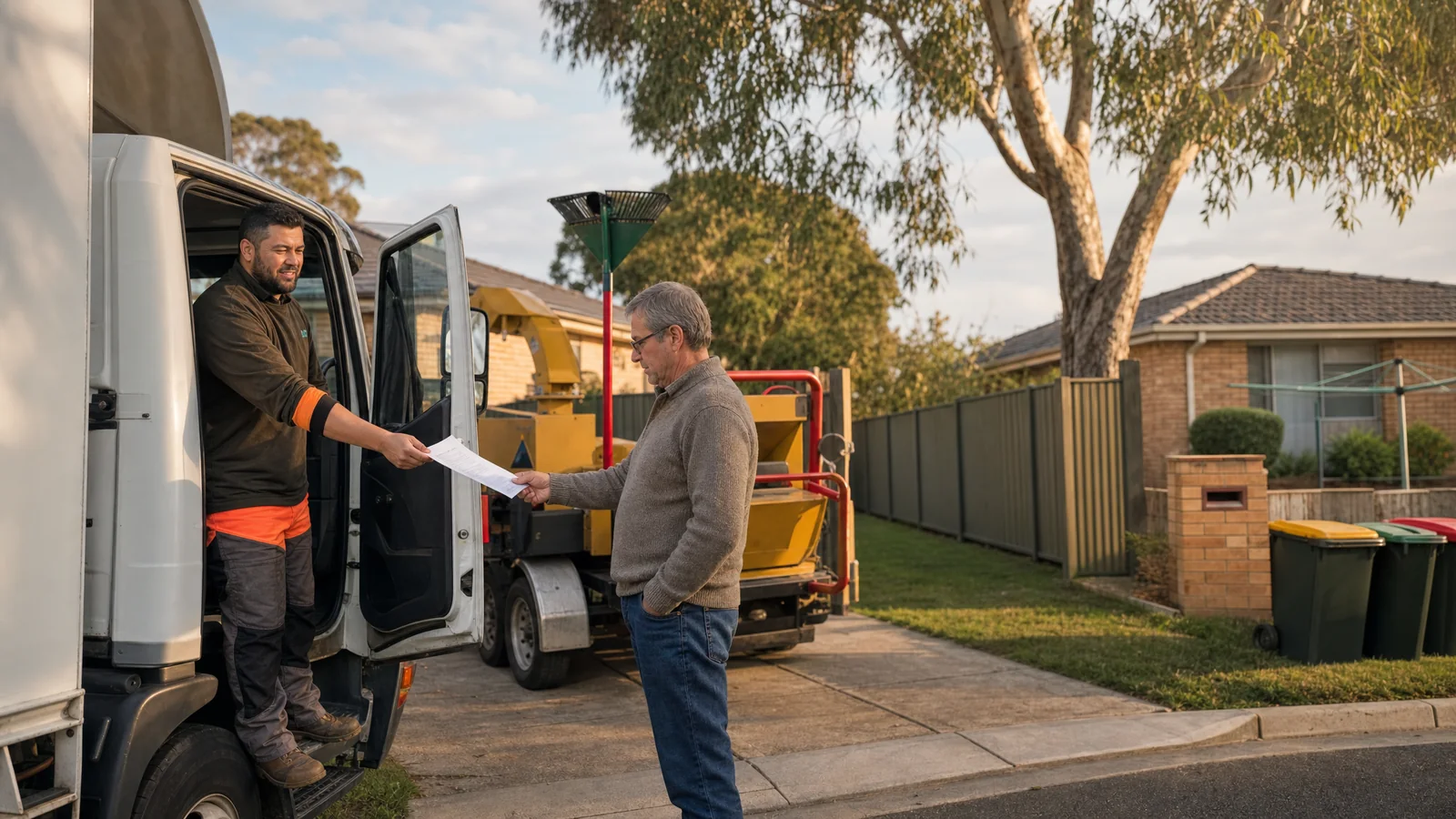
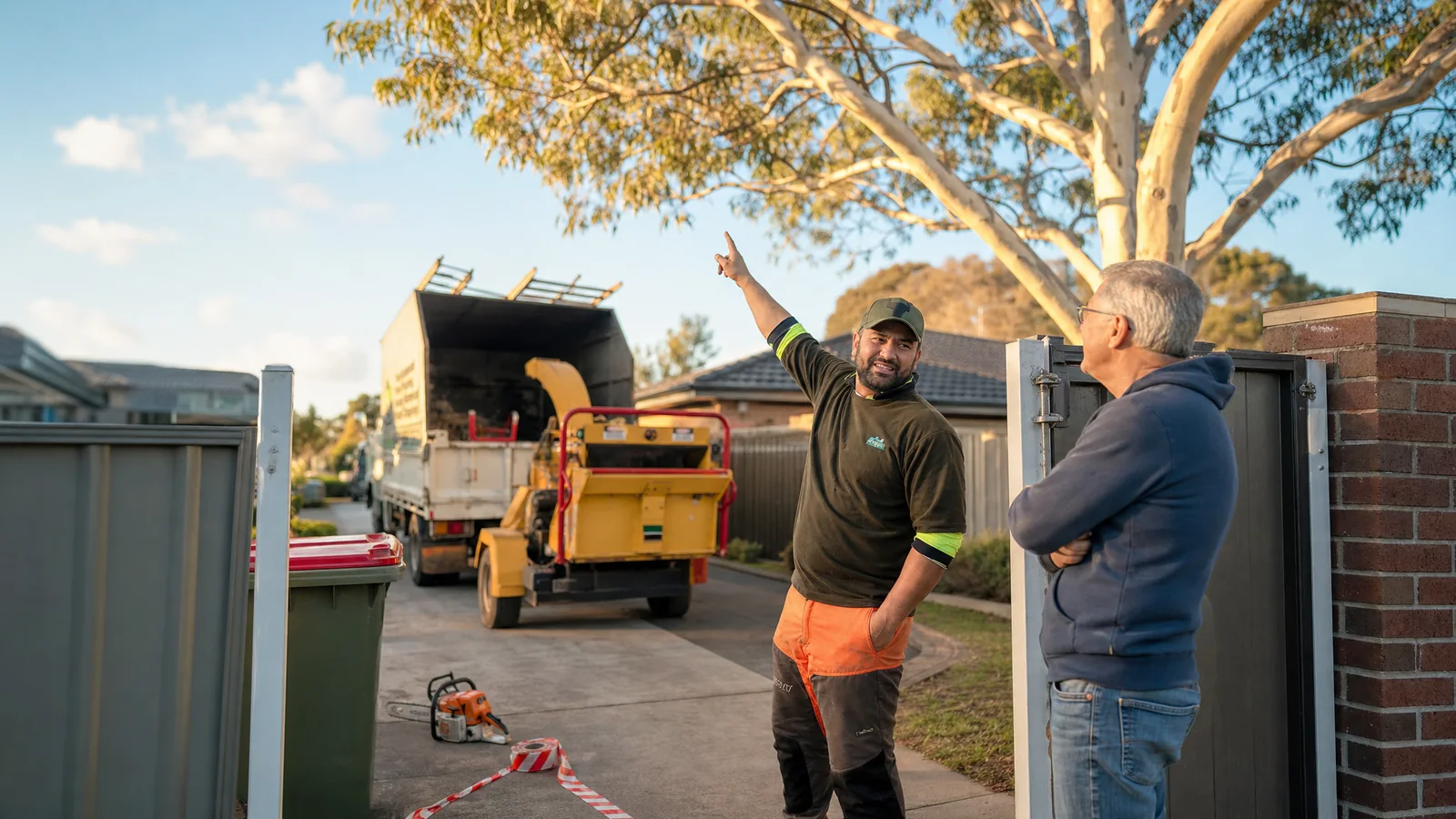
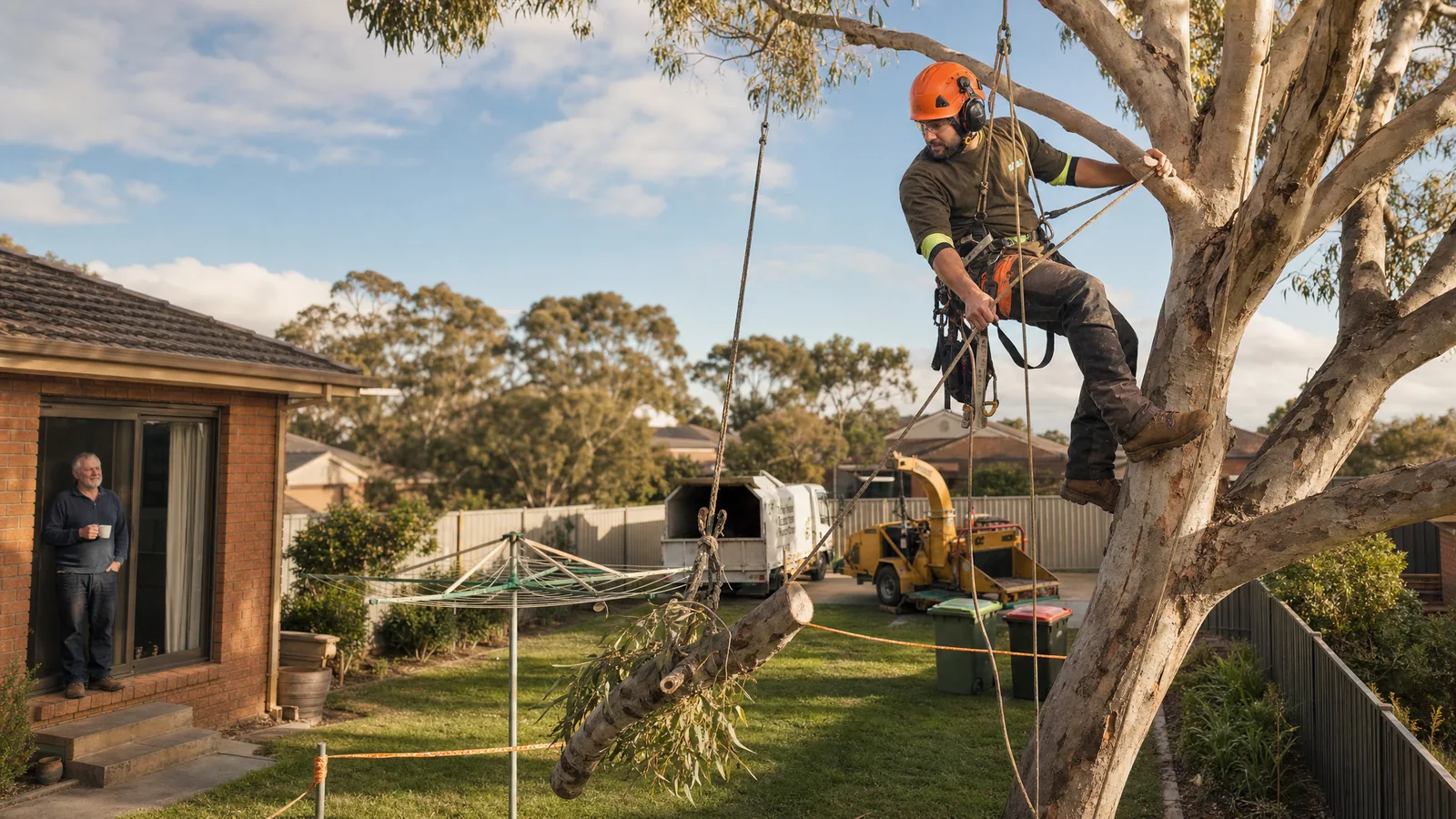
- First thingApi's crew arrives, confirms the fixed quote, walks the access and the drop zone, and sets up the chipper on the driveway
- MorningThe tree is dismantled or felled in sections, the branches go straight through the chipper, and the trunk is cut into rounds
- Late morningThe stump is cut low, the grinder comes through the gate, and the stump is ground 300 to 400 mm below ground
- Early afternoonGrindings are raked into the hole or spread as mulch, the rounds and green waste are loaded, and the site is blown clean
- Before leavingApi walks the job with you, points out the filled hole and the mulch, and the lawn is ready to top and turf
Two trees and stumps removed and site cleanup afterwards at a very reasonable price. Professional and friendly staff. Apps Tree Removal should be your first choice
Two trees, two stumps, one visit, one clean-up: that is the shape of the job that earns a review like that one. It is also why Api's quote lists the stump separately rather than folding it into the removal price. You can see exactly what the grind adds, and you can see that it adds less on the day than it ever will again.
Removing a tree? Ask Api to price the stump on the same visit. Free on-site quotes, 7 days, and the price is fixed before the first cut.
What happens to the chips and the hole
Grinding a stump produces a surprising volume of material, because the wheel turns a solid stump into loose chips and mixes soil in as it goes down. hipages suggests keeping the wood chips because they make great mulch in the garden [2], and that is what most of Api's customers do. There are three ways to handle them.
Back into the hole. The simplest option: the grindings are raked back into the hole and mounded slightly, because they settle as they break down. This suits a spot that is going back to garden bed or will sit under a mulched area.
Spread as mulch. Fresh grindings are a mix of wood and soil, and they are fine on paths, under shrubs and around established trees. Keep them off the crowns of plants and away from the house's timber, and let them weather for a while before using them on vegie beds.
Taken away. If you want the hole ready for turf or paving, Api removes the grindings with the rest of the green waste and the hole is topped with soil. Fresh wood chips under new turf make a poor base, because they sink and rob nitrogen from the soil as they rot, so a lawn repair wants soil right to the surface, then turf or seed.
On timing for a lawn repair, Melbourne Airport's long-term records put the wettest months on average in October and November, with July the driest, so a hole topped and seeded in spring gets the most help from the sky [5]. In summer you will be watering it by hand.
Before the grinder arrives
- Tell Api about every pipe, sprinkler line and cable near the stump
- Measure the side gate and mention any steps or a slope on the way in
- Move pots, edging and anything you want to keep from around the stump
- Decide whether you want the grindings kept, spread or taken away
- Say what the space is for (turf, paving, a post, a new tree) so the depth is right
- Book the stump on the same quote as the tree, not as a second job
Permits, boundaries and neighbours
The stump itself is rarely the permit question, but the tree it came from can be. Since 15 September 2025 every Victorian planning scheme has carried a canopy-tree clause, and a permit is needed to remove, destroy or lop a canopy tree in the listed residential zones in specific circumstances, such as within 6 metres of the street frontage or 4.5 metres of the rear boundary of a lot with a house on it [6]. Api checks the council position on your title as part of quoting the removal, and tells you before anything is booked.
Where a permit is granted, it often comes with a condition. Planning Victoria says many applications carry a requirement to plant replacement canopy trees [6]. Greater Geelong's guide to the clause describes the usual condition as a replacement tree at least 6 metres tall and 4 metres wide at maturity [7]. You cannot plant a tree like that into a stump. Grinding the old one out, and going a little deeper where the new tree is going in, is what turns a permit condition into a planting hole.
Councils differ on top of the state rule. Wyndham, for example, has no local law of its own covering trees on private land, though native vegetation rules and the state clause can still apply [8]. Hobsons Bay, a few suburbs east, runs its own local-law permit for any tree with a trunk of 110 cm or more around at 1.5 metres, with a fee of $137 and about 15 business days to process [9]. That is why Api checks rather than assumes.
Boundaries are the other thing. A stump on the fence line can only be ground from your side, and the grinder cannot reach under a neighbour's fence, so a shared stump is a conversation with next door before it is a job. The Dispute Settlement Centre of Victoria notes that damage from tree roots is one of the common causes of trouble between neighbours, and offers free mediation on 1300 372 888 if it gets that far [10]. In practice a quick word over the fence, and a stump ground flush to the boundary on your side, settles most of it.
Getting the stump quoted properly
Stump grinding is where quotes vary most, because it is the line most often left out. Consumer Affairs Victoria's advice for any home job is to get at least three quotes on the same detailed description, to have a written contract even for small work, and to understand exactly what each quote covers, because the cheapest may not include some items [11]. Its guidance for tradespeople says a quote should state whether it includes transport, how the labour is calculated, and any call-out or weekend rates [12]. If you want the longer version of what a local tree removal company should do before, during and after a job, that guide covers it, and the notes on who to call for tree removal in the west cover how to find a local tree removal crew in the first place. For the stump, the list comes down to a few plain questions.
Questions to ask before you book the stump
- Is the stump in this quote, and is it a separate line I can see?
- How deep will you grind, and can it go deeper where I am planting or fencing?
- What happens to the grindings, and is taking them away included?
- Have you asked where my pipes, sprinklers and cables run?
- Is there a certificate of currency for public liability insurance?
- Is the price fixed, or an hourly rate that grows if you hit rubble?
- Will the same crew do the tree and the stump on the one visit?
The insurance question matters more on a stump than people think. A grinder wheel that finds a water main or a cable is not a rare story in the trade, and a business without public liability cover has nothing to claim against. Consumer Affairs Victoria's checklist says to ask for a certificate of currency for public liability insurance, which protects you and third parties against damage the workers may cause [11]. Api is fully insured and shows the certificate without being asked, and the insurance and qualifications to ask for on a stump job are exactly the ones you would ask for on the tree. What your own home policy does and does not pick up is a separate question, and the guide to tree removal insurance walks through it.
The stump is cheapest on the day the tree comes down, and dearer every day after.
What Api's stump quote includes
Every quote from our stump removal service is a site visit, a fixed written price, and a plain explanation of what will happen. The stump is listed as its own line, whether it is riding on a tree removal or booked on its own, so you can see exactly what it adds. The price covers grinding to 300 to 400 mm below ground, the surface roots that flare from the stump, and the clean-up, with the grindings left, spread or taken away as you choose. Api asks about pipes, cables and rubble before he quotes, checks the council position on your title where a tree is involved, and tells you straight what the grind will and will not reach. The person who quotes is the person who turns up, fully insured, 7 days a week from 6am, and hazards go to the front of the queue.
That is the whole case for booking the tree and the stump together: one visit, one clean-up, one price you can see, and a backyard that is yours again the same day.
How you get a stump-free lawn you can mow, pave or plant straight over
Getting a stump-free lawn you can mow, pave or plant straight over does not have to be complicated. At Aps Tree Removal we look at the job with you, tell you what actually needs doing and what does not, and put a fixed price on it before anything is cut.
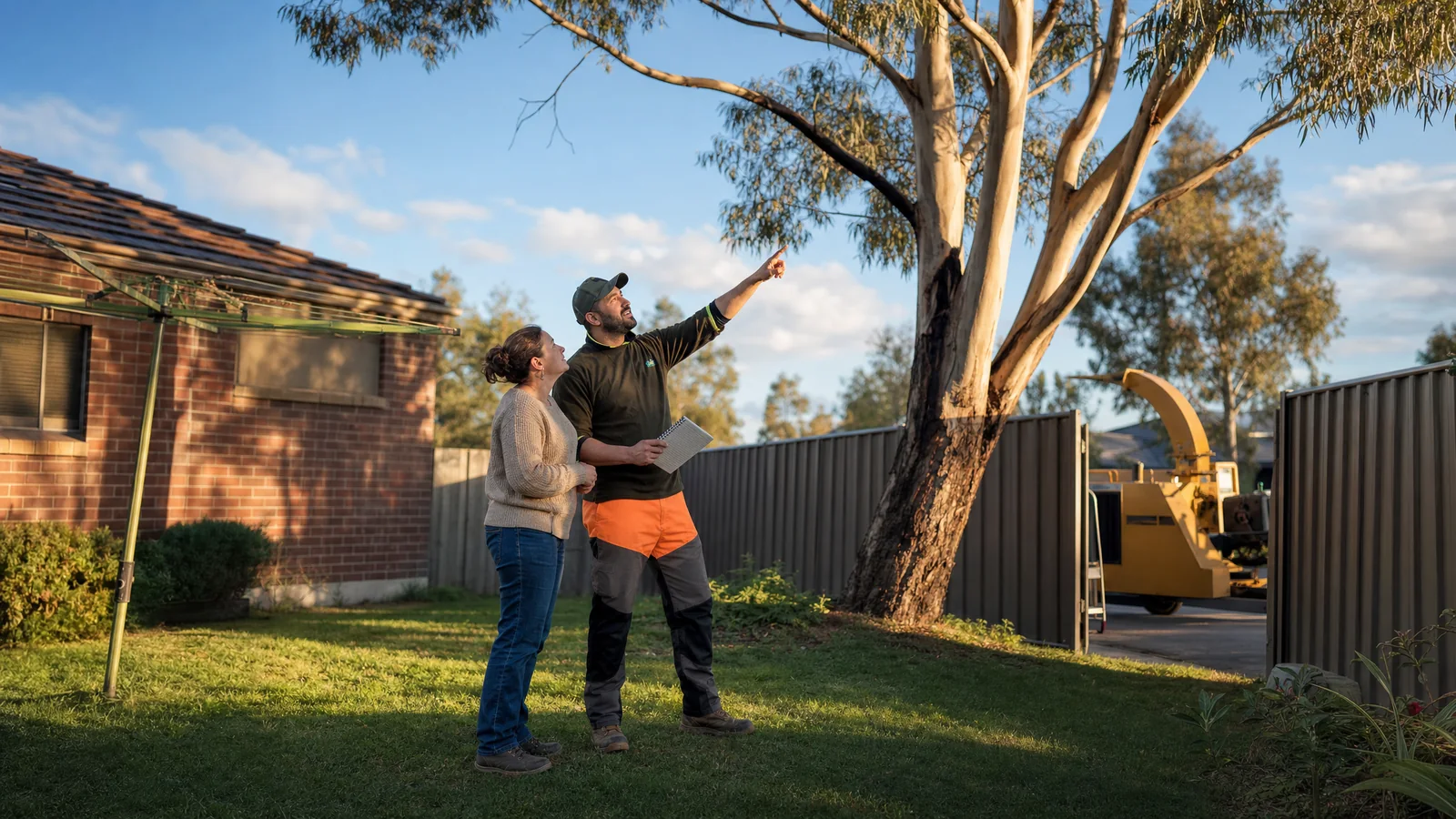
No pushy sales. Api comes out, walks the property with you, explains the options and what each one means for the result, the risk and the price. You decide at your own pace. People choose us because they understand the job before they book it, and the crew that quotes is the crew that turns up.
We will tell you if a council permit applies and what the process is, we will point out anything near powerlines or the neighbour's boundary that changes the method, and we will say plainly when a cheaper option is the better one. Every job is done by a qualified arborist, fully insured, and the site is left cleaner than we found it.
Get in touch today. Api quotes for free, 7 days, 6am to 5pm, across Melbourne's west, the inner city and Geelong.
How we work with you
We talk and answer your questions
Call 0422 856 090 or send the form. Api asks what is worrying you about the tree, hedge or stump, what access is like, and whether anything sits near powerlines or a fence line.
We look and give you a fixed price
Api visits, inspects the tree or hedge, checks the permit position for your council, and quotes in writing. The price covers the job, the clean-up and the green waste unless we say otherwise.
You decide what works best
Remove, reduce, prune or wait: we explain the difference and what each costs. No pressure, no expiring offers. The choice is yours.
We do the job and stay in touch
The crew arrives when we said, works to the plan, and leaves the site clean. If the tree throws a surprise on the day, we tell you before we change anything.
Frequently asked questions
How much does stump grinding cost in Melbourne?
Public indicative figures start around $100 to $150 for a small stump about 10 cm across and run to $800 or more for large ones, with access, buried pipes and rubble moving the price more than the width does. Api quotes every stump on site for free, and the price is fixed before the grinder starts.
How deep does Api grind a stump?
300 to 400 mm below ground, which takes out the part that would reshoot and leaves enough depth to relay turf, pave or plant over the spot. Where you are putting in a fence post, a slab or a replacement tree, tell him and the grind goes deeper at that point.
Can I just leave the stump and let it rot away?
You can, but it will not simply disappear. Most stumps push new shoots, take years to break down, and a decaying stump is a magnet for ants, cockroaches and termites. Grinding it out on the day the tree comes down is the cheapest fix you will get.
Is the stump included in the tree removal price?
Not usually, anywhere in the industry: it is a separate machine and a separate line. Api lists the stump on the same quote so you can see what it adds, and it costs less on the day of the removal than it ever will as a second visit.
Can a grinder get into a narrow side path or courtyard?
Yes. Tight-access grinding along side paths, in courtyards and between structures is something Api is set up for, and the work is done without damaging the paving or fences around it. Narrow access does add time, so mention the gate width when you call.
What happens to the grindings and the hole?
The grindings are a mix of wood chips and soil. Api can rake them back into the hole, leave them for you to spread as mulch on beds and paths, or take them away with the green waste. For a lawn repair the hole is best topped with soil before turf or seed goes down.
Will grinding damage pipes or cables under the lawn?
Only if nobody checks, which is why Api asks where the water, gas, irrigation and any cables run before he starts and works around them. Tell him about sprinklers, drainage lines and anything a previous owner buried near the tree.
Do I need a council permit to grind a stump?
The permit question belongs to the tree rather than the stump, and Api checks the council position on your title when he quotes the removal. Where a permit comes with a condition to plant a replacement tree, grinding the old stump is what clears the space to plant it.
Sources
- hipages: How much does an arborist cost? [2026] (updated 6 January 2026)
- hipages: How much does stump grinding cost? [2026] (updated 6 January 2026)
- Safe Work Australia: Guide to managing the risks of tree work (March 2023)
- hipages: How much does tree removal cost? [2026] (updated 22 January 2026)
- Bureau of Meteorology: Climate statistics for Australian locations: Melbourne Airport
- Planning Victoria (Department of Transport and Planning): Protecting and enhancing our tree canopy for a greener Victoria
- City of Greater Geelong: Canopy trees: clause 52.37
- Wyndham City Council: Planning frequently asked questions
- Hobsons Bay City Council: Tree protection laws and permits
- Dispute Settlement Centre of Victoria: Neighbour disputes: trees
- Consumer Affairs Victoria: Home improvements costing $10,000 or less: checklist
- Consumer Affairs Victoria: Giving quotes: tradespeople and small works (updated 8 July 2025)
Information about tree work, council permits and insurance changes often, and every property is different: figures here are general guidance and linked pages may change or become outdated. For a price on your own tree, hedge or stump, call Api on 0422 856 090 for a free quote.